Hi, I’m Patricia Woods👋

I have always had a deep interest in people. Why do people do they we do? How do we make choices? How can two people look at the exact same world so differently? I believe that my own life circumstances drew me into the field of counseling, as is the case for many in this work. Through both my personal and professional experiences, I’ve learned to see life not as a fixed destination, but as a gentle, ongoing iteration of our own growth and change. My journey has led me to become a counselor, yoga and meditation instructor, coach, and workshop facilitator.
I chose the puzzle piece as a way to capture the continual shifting and reshaping of our lives. Creating your best life is about learning to recognize what fits at what time, knowing when to let go, and learning not to force. Often people have a specific end game in mind, so it is easy to feel blindsided by the unexpected twists and turns life throws their way. I often meet my clients in these spaces where they feel deeply stuck, struggling to come to terms with how a chapter has unfolded.
Developing the skills to sit with intense emotions at these critical junctures is key. These are the areas where I lean into mindfulness, breathwork, and meditation—in addition to traditional talk therapy—to guide you in settling your mind and regulating your nervous system. Supporting you to feel safe as you experience your emotions on both a physical and emotional level allows you to deeply understand the meaning this chapter holds, rather than missing the wisdom that is here for you by trying to avoid the pain.
My Journey & Philosophy
Clinical foundation
I began my career in Massachusetts, working in a variety of settings where I developed my clinical foundation. I was exposed to the pioneering mind-body work of Jon Kabat-Zinn and began to see the profound connection between the body and mind, both in my own life and in my work. I was deeply interested in the connection between disease, immunity, and stress as a result of experiencing family members and friends dealing with illness. I trained to become a yoga instructor so I could weave these experiential tools directly into my practice.
Integrating mind and body
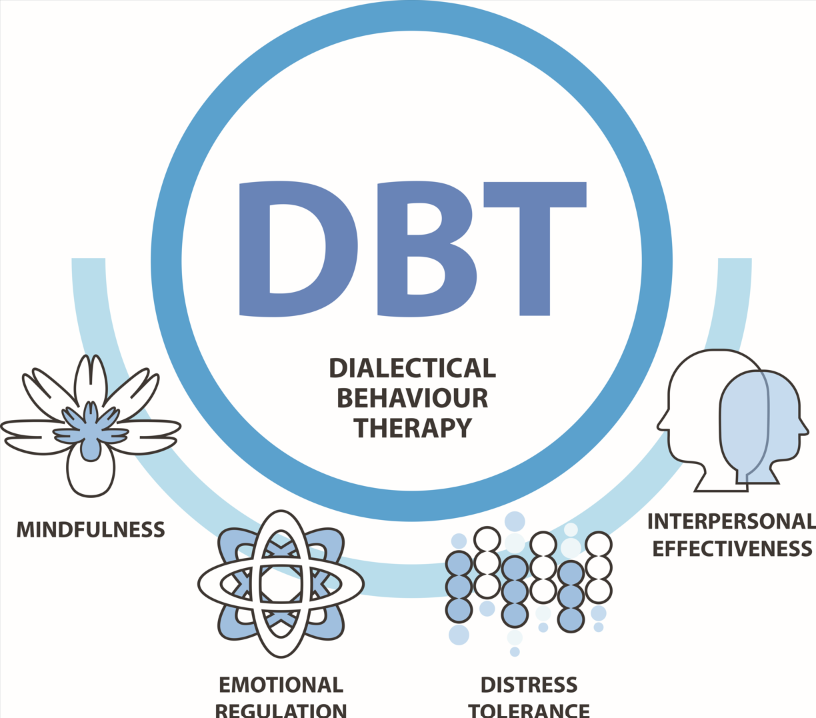
At the time, I was working as a clinician with court-adjudicated youth in residential treatment. The Department of Youth Services began using DBT as their treatment model, which fit perfectly with my desire to bring more of a mind-body focus to my clinical work, as the foundation of DBT was based in mindfulness. I was able to create a yoga club at my program and later became more deeply immersed in DBT as I was integrated into a team providing staff trainings for residential facilities in the Boston area.
This experience continually demonstrated to me the profound benefits of mindfulness and breathwork, and the vital importance of learning to be embodied—feeling truly connected to the body rather than just living in the head. Throughout my career, I have continued to offer breathwork and meditation as opportunities for clients to come more into contact with the stillness that lies within them.
The field of neuroplasticity demonstrates the brain’s capacity to continually grow and evolve. It highlights the power of our thoughts and the importance of intentionally directing our attention. Through self-awareness, you have the ability to develop new neural pathways that move you in the direction of the positive changes you seek, as well as the ability to diminish the strength of the pathways that hold you captive to old, undesirable behaviors.